What makes an anti-raid sky settlement in Rust so hard to attack?
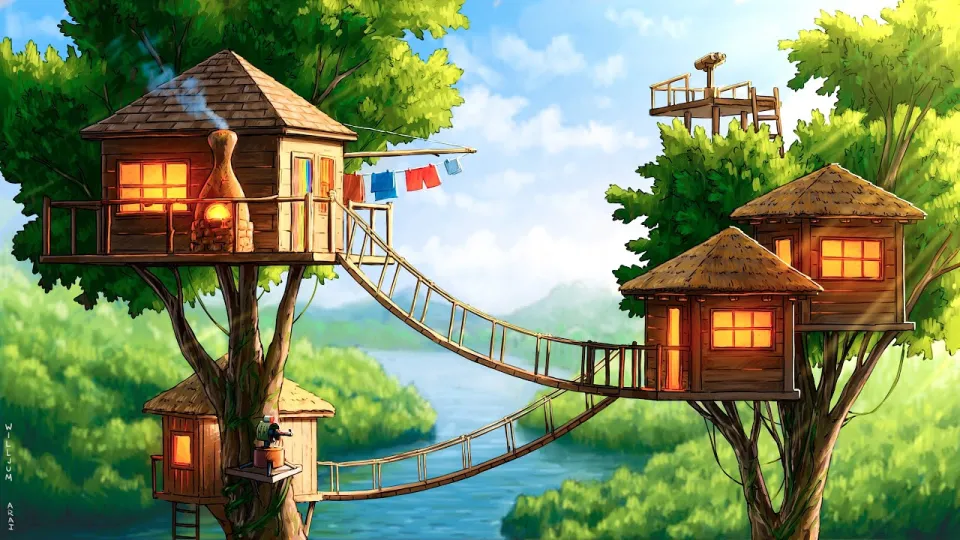
Video: I Built an anti raid sky settlement in Rust...
You can order the same kind of articles for your own video to boost it on YouTube and Google. Just message the Telegram bot @sat_sit_bot. It writes articles around your video, embeds the video and publishes them on popular niche websites (no ads). Free trial — 50 articles.
An anti-raid sky settlement in Rust is a base built high off the ground so that attackers have to spend more time, materials and explosives to reach it than the loot inside is worth. The idea is simple: Rust's raid meta is tuned for ground-level targets, so lifting your core upward removes the easiest approaches. Willjum's build video walks through the whole project, and viewers who support more of these long-form stories can do so through Willjum's Patreon page, where the channel's behind-the-scenes work is funded.
Why height changes the raid math in Rust
Height is the cheapest defensive layer in Rust because it costs nothing to use and everything to overcome. A raider who wants your boxes has to first reach the base, then survive the climb, then commit explosives while exposed on a narrow ledge or in mid-air. Every one of those steps adds risk, and risk is what turns a profitable raid into a waste of sulfur.
On the ground, a raid usually follows a fixed script: find a soft side, blow a door, work through honeycomb, take the loot. A sky settlement breaks that script in three ways:
- Approach time. Attackers must build a raid tower, use ladders or fly in, and each method is visible and slow.
- Exposure. Anyone climbing is a free target for the defender, who can shoot from above with a height advantage.
- Cost per loot. Explosives spent on reaching the base are explosives not spent on the loot room, and a compact high base forces raiders to bring more than they expect.
That is the core of the anti-raid concept: you are not trying to be unraidable, you are trying to be not worth raiding.
What a sky settlement actually costs to build
A sky settlement is expensive in logistics rather than in raw materials, and that is the part most players underestimate. Every foundation, wall and deployable has to be carried up, and the higher you go the more trips you make. In practice the build cost breaks down into three buckets:
- Structure: stone or metal frames for the platform, plus honeycomb to absorb splash damage.
- Vertical access: stairs, ladders or a lift system that you can pull up behind you so attackers cannot reuse it.
- Support systems: tool cupboards, turrets, beds and storage, all of which need power or ammo delivered regularly.
Solo players should treat the settlement as a multi-day project. Start with a small core platform, get a tool cupboard down, then expand outward and upward. Building the full silhouette first and filling it later is how sky bases collapse under their own maintenance.
The weak points that decide whether the base holds
Every sky base fails at the same handful of places, and knowing them is what separates a design that survives a wipe from one that gets opened on day two. The most common failure points are:
- The access route. If attackers can reach your lift, ladder or stairs, they inherit your base. Make the final approach something only you can restore.
- The underside. Many sky builds leave the floor thin because nobody looks up. Raid towers aim straight at it.
- The tool cupboard. A single cupboard is a single point of failure; on a tall base it is also the hardest thing to defend while you are climbing.
- The loot room. Concentrating everything in one room means one successful breach ends the wipe.
A useful rule: walk around your own base from the ground and ask which side you would attack. If the answer comes instantly, that is the side a raider picks too.
How raiders actually counter a sky settlement
Raiders do not need to beat a sky base in a straight fight, they need to make the climb safe, and there are only a few reliable ways to do it. Raid towers are the classic answer: build up nearby, then bridge across. Ladders and climbing tools are the cheap answer, and they punish any base with a flat, reachable wall. Flying in with a parachute or a minicopter is the fast answer, and it is why open rooftops are a liability.
The counter-design is to make every route awkward: no flat landing pads, no ladder-friendly outer walls, no line of sight from a nearby hill or tower. Turrets covering the approach angles do more work than extra layers of honeycomb, because they punish the moment of exposure rather than the moment of impact.
What solo players should take from the build
The sky settlement works best as a solo project when it stays small, and that is the main lesson of the format. A compact high base is easier to supply, easier to defend alone and cheaper to rebuild after a raid. Three practical guidelines:
- Keep the footprint tight enough that one player can cross it in a few seconds.
- Store loot in more than one place, so a single breach does not end the wipe.
- Rebuild the access route after every fight, because that route is the base.
Players who prefer ground bases are not wrong; sky builds trade convenience for security, and that trade only pays off if you actually maintain it.
Common questions viewers raise about sky bases
The most frequent doubt about sky settlements is whether they are worth the effort at all, and the honest answer is that they suit players who enjoy the building process. Viewers who have never played Rust often ask why anyone would spend a wipe on a single structure, while veteran players ask the opposite question: how long it survives once the server notices it. Both questions point at the same truth, which is that a sky base is a deterrent first and a fortress second. It buys time, and time is what a solo player needs to progress.
Useful links
- Willjum on Patreon — support the channel and its long-form Rust stories.
- https://www.twitch.tv/willjum — live survival streams.
- https://twitter.com/willjum1 — updates and announcements.
- http://creativecommons.org/licenses/by/4.0/ — the license covering music used in the video.
The verdict on anti-raid sky settlements
An anti-raid sky settlement is not a magic shield, it is a cost multiplier applied to anyone who wants your loot. Willjum's build shows the trade clearly: you spend hours on logistics and maintenance, and in return you get a base that most raiders will look at and skip. For solo players the format rewards patience, compact layouts and a willingness to rebuild the access route after every encounter. If you want to see how the project plays out from first foundation to final defense, the full video is worth a watch, and supporting the channel through Patreon keeps these builds coming.
Key takeaways
- Sky bases in Rust exploit vertical distance: most raid tools and raid bases are built for ground-level targets, so height itself becomes a layer of defense.
- Building high means every wall, foundation and deployable has to be hauled up by hand or with a lift, which raises the material and time cost of the whole project.
- Ladders, climbing picks and parachutes are the main ways attackers reach a sky base, so the design has to deny easy footholds on every side.
- Rockets and C4 still work at altitude, but splash damage and stability rules make large explosive raids on a tall, compact base inefficient.
- Willjum's video builds the settlement as a solo-friendly project, which means the layout has to stay compact enough for one player to maintain.
Questions & answers
Is a sky base in Rust actually unraidable?
No. Rockets, C4 and raid towers still reach a sky base, and a determined group will always find a way in. The goal is to make the raid cost more than the loot is worth, so most attackers move on to an easier target.
How much does it cost to build a sky settlement as a solo player?
The material cost is moderate, but the logistics cost is high: every wall and deployable has to be carried up, and the base needs constant resupply of ammo, power and building materials. Treat it as a multi-day project and start with a small core platform.
What is the biggest weakness of a high base?
The access route and the underside. If raiders can use your lift, ladder or stairs, they inherit the base, and a thin floor is an easy target for a raid tower built underneath.
Do I need to play Rust to enjoy Willjum's videos?
No, and that is a recurring theme among viewers who watch every week without ever launching the game. The appeal is the storytelling and the pacing of each wipe, with the base building as the backdrop rather than the requirement.
Source: I Built an anti raid sky settlement in Rust... · Markdown version